


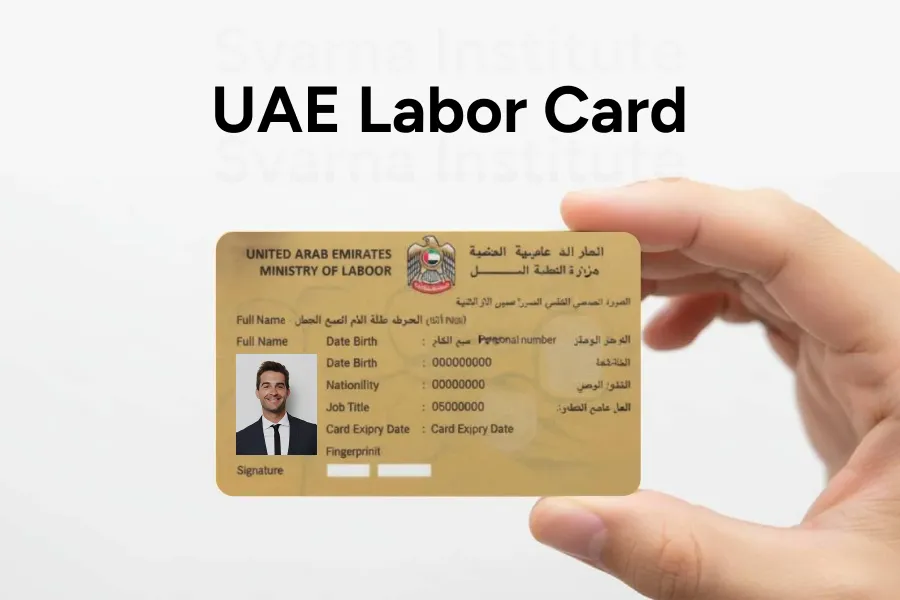
If you have recently started a job in the UAE, plan to hire employees, manage HR operations, or oversee company compliance, understanding the UAE labour card system is no longer optional. It is one of the most important employment documents in the country’s private sector workforce framework.
Many employees and employers still ask common questions
✦ Is a labour card the same as a work permit?
✦ Can you download it online?
✦ How do you check its status?
✦ What happens if it expires?
✦ Who is responsible for obtaining it?
The challenge is that employment regulations in the UAE continue to evolve. What was once a physical card carried by employees has now transformed into a digital employment authorization system managed through government platforms and smart services. As a result, outdated information found online often creates confusion for both employers and workers.
This guide explains the key facts about UAE labour cards, including their purpose, how they relate to work permits, how to access them, employer responsibilities, employee rights, renewals, cancellations, and compliance requirements.
What’s Inside This Guide
✅ UAE labour card basics and how it works in 2026
✅ Labour card vs work permit, visa, and Emirates ID
✅ Who needs a labour card and who is exempt
✅ Employer and employee responsibilities
✅ MOHRE rules and compliance requirements
✅ Labour card application process and required documents
✅ How to check, download, and access your labour card online
✅ Status checks, expiry dates, fines, and violations
✅ Renewal, cancellation, and job change procedures
✅ Rules for free zone employees, freelancers, students, investors, and domestic workers
✅ Common mistakes and how to avoid them
✅ Official MOHRE links, apps, and support channels
By the end of this article, you will understand not only how the system works, but also how to avoid common mistakes that can lead to delays, penalties, compliance issues, and unnecessary legal complications.
01. What Is a UAE Labour Card?
The UAE labour card is an official work permit issued by the Ministry of Human Resources and Emiratisation (MOHRE). While many people still use terms such as labour card UAE, Dubai labour card, or MOHRE labour card, the traditional physical card has largely been replaced by a digital system.
In simple terms, a labour card is the government’s authorization that allows an individual to work legally for a private sector employer in the UAE.
A valid labour card confirms that
✦ The employee has been legally hired by a registered employer.
✦ The employment contract has been recorded with MOHRE.
✦ The employee’s job title and salary have been officially registered.
✦ The employment relationship is recognized under UAE labour regulations.
The labour card is an important part of an employee’s official employment record and is often required when verifying work status or accessing labour related services.
Key information you get on a digital labour card
🔹 Employee full name
🔹 Nationality
🔹 Employer name
🔹 Establishment details
🔹 Job title and profession
🔹 Labour card or permit number
🔹 Issue date
🔹 Expiry date
🔹 Employment contract type
🔹 Salary details registered with MOHRE
🔹 Employment status and permit information
Today, employees can access their labour card information through MOHRE’s digital platforms instead of relying on a physical card. This system helps improve accuracy, transparency, and access to employment records.
Why is the UAE labour card important?
The UAE labour card is an essential document that confirms a legal employment relationship between an employee and employer. It connects both parties to the rights, protections, and responsibilities set by UAE labour law.
For employees, it proves legal employment and supports benefits such as salary protection, contract enforcement, dispute resolution, and end of service benefits.
For employers, a valid labour card ensures compliance with regulations and helps avoid fines or legal issues.
Did You Know?
Your UAE labour card is no longer a plastic card, but a fully digital work permit record? It is linked to your Emirates ID and UAE Pass, and you can download a QR coded PDF from the MOHRE Smart App that banks, landlords and government counters accept as official proof of employment.
02. Labour Card vs Work Permit vs Residence Visa vs Emirates ID
One of the most common sources of confusion among employees in the UAE is understanding the difference between a labour card, work permit, residence visa, and Emirates ID.
Many people use these terms interchangeably, assuming they all represent the same document. In reality, each serves a completely different legal purpose.
Understanding these differences is important because each document is issued by a different authority, carries different rights and obligations, and plays a unique role in your employment and residency status within the UAE.
The best way to answer this,
✦ A Labour Card (Work Permit) grants you the legal permission to work in the UAE.
✦ A Residence Visa provides you with the legal authorization to live in the UAE.
✦ The Emirates ID serves as your official proof of identity within the country.
✦ An Employment Contract clearly defines your job role, salary, and additional benefits.
Together, these documents support your legal employment and residency status in the UAE.
Labour card and work permit
Today, the terms labour card and work permit are often used interchangeably. While labour cards were once issued physically, they are now maintained digitally through MOHRE records and confirm your legal employment status.
Residence visa and Emirates ID
A residence visa allows you to stay in the UAE, but it does not automatically grant the right to work. Separate work authorization may still be required. The Emirates ID is your official identification document and is used for banking, healthcare, government services, rentals, and other everyday transactions. While the Emirates ID confirms who you are, it does not replace a work permit or employment authorization.
Did You Know?
Your labour card is a completely separate record from your Emirates ID and residence visa, issued by MOHRE solely to confirm your legal right to work for one specific employer? In most private sector cases it is valid for two years, while some government roles get up to three years on their labour card.
03. Who Needs a Labour Card in the UAE (and Who Is Exempt?)
In the UAE, most private sector employees are required to obtain a valid labour card, commonly referred to as a work permit, before they can legally begin their employment, though the specific issuing authority depends on the type of employer.
For those working in mainland private sector companies, the Ministry of Human Resources and Emiratisation (MOHRE) is generally the responsible authority, and its labour card is mandatory for a wide range of staff. This includes expatriate employees, skilled and unskilled workers, managers and professionals, as well as administrative, sales, technical, and operations personnel.
Ultimately, the labour card serves as official confirmation that the employee is legally authorised to work specifically for their sponsoring employer.
Who Does Not Receive a MOHRE Labour Card?
Not all employees in the UAE fall under the MOHRE labour card system. Several categories are governed by separate regulatory frameworks, each with its own work permit and sponsorship rules.
🔹 Free Zone Employees
Employees in free zones do not receive MOHRE labour cards; instead, their work permits are issued by the governing authority of their specific free zone. Each zon, such as DMCC, DAFZA, JAFZA, Dubai Internet City, and Dubai Media City, operates its own employment and permit system.
🔹 Government Employees
Federal and local government employees are exempt from MOHRE labour card requirements, as their employment is managed through separate government HR frameworks. These frameworks include civil service regulations, pension schemes, and career structures that differ from private sector labour laws. Work authorisation for government staff is issued directly by their respective government entities under federal or local decrees.
🔹 Domestic Workers
Domestic workers, including maids, nannies, drivers, and caregivers are governed by a separate legal framework under Federal Decree Law No. 9 of 2022 (amended by No. 21 of 2023), which sets specific rules on contracts, hours, leave, and accommodation. While their residence visas are processed through GDRFA or ICP, their recruitment, contracts, and work permits fall under MOHRE, which licenses agencies and handles disputes. Domestic workers do not receive the standard MOHRE labour card.
🔹 Other Categories and Special Work Permits
The UAE offers flexible permit options for investors, freelancers, part timers, temporary staff, students, Golden / Greeen Visa holders, and remote workers. Many of these are self sponsored or licence based, meaning they do not require a conventional MOHRE labour card.
Did You Know?
That even if you hold a 10 year UAE Golden Visa, you still need a separate labour card if you take up employment with a UAE company? Golden Visa holders working in mainland firms must maintain a standard two year labour card, while some free zones issue their own non sponsored ID cards with one to five year validity instead.
04. Employer and Employee Responsibilities (Fees, Timelines, and Compliance)
A labour card comes with legal responsibilities for both employers and employees. Following the rules helps avoid fines, disputes, and compliance issues.
Employer Responsibilities
Under UAE labour regulations, employers are responsible for ensuring that workers are employed legally and that all employment records remain accurate and up to date.
Key employer responsibilities include:
- Apply for the work permit within the required timeframe
- Provide accurate employee and contract details
- Keep employment records updated
- Renew permits before they expire
- Cancel permits when employment ends
- Comply with MOHRE regulations
Employee Responsibilities
Employees should:
- Review their job offer and labour contract before signing
- Submit accurate personal documents
- Keep their records updated
- Follow employment terms and conditions
- Work only for authorised employers unless additional permits are approved
Many labour disputes arise because employees unknowingly violate permit conditions by working for another employer without proper authorisation.
Who Pays the Labour Card Fees?
A common question among employees is who bears the cost of labour card fees. Legally, the employer is responsible for all government charges related to obtaining and renewing a work permit and labour card. These costs include work permit fees, application charges, government processing fees, service centre costs, and renewal expenses. Employees should not be required to pay any mandatory government fees associated with their labour card, and employers who pass these costs on to workers may be in violation of UAE labour regulations.
Working Without a Labour Card? What Are the Consequences?
Working without a valid labour card carries serious legal and professional consequences for both employees and employers. Potential penalties include fines, restrictions on obtaining future work permits, violations of labour law, employment disputes, and visa related complications that could affect residency status. To avoid these risks, both parties must ensure that all work permits and labour records remain valid and up to date at all times, as non compliance can lead to significant financial and legal repercussions.
MOHRE Regulations on Labour Cards You Should Know
To understand how labour cards work in the UAE, it is important to understand the role of MOHRE and the legal framework governing private sector employment.
The Legal Foundation
Private sector employment in the UAE is primarily governed by Federal Decree Law No. 33 of 2021, along with its associated regulations. This comprehensive legal framework establishes the rules for work permits, employment contracts, employee rights, employer responsibilities, labour dispute resolution, and overall compliance requirements. Both employers and employees must adhere to this law to ensure their working relationships are legally valid and protected.
MOHRE’s Role
The Ministry of Human Resources and Emiratisation (MOHRE) serves as the primary regulatory authority for private-sector employment in mainland UAE. Its key responsibilities include issuing work permits, approving and standardising employment contracts, monitoring workplace compliance, resolving labour disputes, and safeguarding employee rights. Every labour card or work permit issued by MOHRE forms an official part of an employee’s employment record, which is used to track their legal work status and entitlements.
Working Without a Valid Work Permit Is Illegal
Under UAE law, it is strictly illegal for any employee to begin work without a valid work permit, and employers are equally obligated to obtain the necessary permits before hiring any staff. This requirement is designed to protect both parties by ensuring legal employment status, safeguarding employee rights, enforcing wage compliance, and promoting fair labour practices throughout the workforce. Violating this rule exposes both employers and employees to serious legal and financial penalties.
Digital Labour Cards
For many years, employees received physical plastic labour cards. Today, the UAE has largely transitioned to a digital employment ecosystem. Instead of carrying a physical labour card, employees can access employment records electronically through government systems and approved digital platforms.
Benefits include:
- Quick access to records
- Better accuracy
- Less paperwork
- Easier verification
Today, when people refer to a labour card, they are usually referring to a digital employment record rather than a physical card.
Did You Know?
Your employer (not employee) is legally responsible for issuing your labour card within about 60 days of your arrival and for renewing it on time? Employers who fail to issue or renew the card face late renewal penalties and can be fined up to AED 50,000 for not obtaining a labour card at all under UAE labour law.
05. How to Get a New Labour Card (Work Permit) Step by Step
In most cases, employees do not apply for a labour card themselves. The process is handled by the employer, HR team, or company PRO as part of hiring and visa sponsorship. Understanding the process helps you track progress, spot delays, and ensure all requirements are completed.
To get a labour card in the UAE, your employer must first obtain approval from MOHRE. The process typically includes:
- Work permit approval
- Medical fitness test
- Emirates ID registration
- Residence visa processing
- Issuance of the digital work permit
Once these steps are completed, your labour card/work permit becomes available through MOHRE’s digital systems.
Did You Know?
Your company’s salary payment behaviour can directly affect labour cards, because serious Wages Protection System (WPS) violations trigger an automatic suspension of new work permits? From 1 June 2026, a salary delay of just five days from the start of the month can freeze fresh labour card issuances, with longer delays leading to fines, Category C classification and even asset attachment or prosecution.
Step by Step Labour Card Application Process (Mainland MOHRE)
The application for a labour card generally follows the sequence below for mainland private sector employees.
- Job Offer & Work Permit Application
The employer issues a job offer and submits a work permit request to MOHRE. - MOHRE Approval
MOHRE reviews the application and verifies the employer, employee eligibility, and required documents. - Entry Permit or Status Adjustment
The employee either enters the UAE on an approved permit or adjusts their status if already in the country. - Medical Fitness Test
The employee completes the required medical examination. - Emirates ID Registration
Biometric data is collected and the Emirates ID application is processed. - Residence Visa Processing
The residence visa is issued and linked to the employee’s records. - Digital Labour Card Issuance
MOHRE issues the employee’s digital work permit, allowing them to legally work for the sponsoring employer.
Required Documents
The exact documentation may vary depending on the employee’s nationality, profession, and permit category. However, most applications require the following.
Employer Documents
- Valid trade licence
- Establishment card
- Company registration documents
- Authorized signatory approvals
- Electronic signature registration
- MOHRE establishment records
Employee Documents
- Passport copy
- Passport size photographs
- Entry permit (if applicable)
- Emirates ID application records
- Educational certificates (for certain professions)
- Professional qualifications where required
- Medical fitness certificate
- Additional supporting documents requested by authorities
Providing complete and accurate documents from the beginning helps reduce processing delays and avoids unnecessary application rejections.
Typical Processing Time and Validity
A common question is about UAE labour card processing time.
The actual timeframe depends on:
- Company compliance status
- Accuracy of submitted documents
- Employee category
- Medical and Emirates ID processing
- Government approvals
In many cases, work permit approval can be obtained within a few business days if all documents are submitted correctly. However, the full process including medical testing, Emirates ID registration, residence visa issuance, and work permit activation may take several weeks.
How Long Is a Labour Card Valid?
Labour card validity varies based on the employment contract and applicable regulations. Most work permits are issued in line with the employee’s residence visa and employment arrangement. Employers should track expiry dates and begin renewals early to avoid penalties or compliance issues.
Who Is Authorised to Issue a Labour Card?
A labour card is issued only by authorised government authorities that regulate employment in the UAE. For mainland private sector employees, work permits are issued by MOHRE. In free zones, the relevant free zone authority manages the process according to its regulations.
If you are researching how to get labour card, ensure the application is processed through official government channels and linked to a legally registered employer. Avoid unofficial arrangements, as bypassing approved procedures can lead to legal and financial consequences for both employers and employees.
Did You Know?
That by law, your employer must pay 100% of your work permit and visa related costs, and they are not allowed to deduct the labour card fees from your salary? In 2026, a typical full employment visa package, including MOHRE work permit, medical, Emirates ID and residence visa costs employers roughly AED 3,000 to AED 7,500 per hire
06. How to Access, Download and Check Your Labour Card Details
Most labour cards are now issued digitally, making access quick and convenient. Employees can view their labour card details through official government platforms, mobile apps, and authorised online services.
Whether you need information for visa processing, employment verification, banking, or personal records, it is important to know where to find your labour card details.
This section explains how to check your labour card number, access digital records, and complete a UAE labour card download through official channels.
What is Labour Card (Work Permit) Number?
What is labour card number? It’s the unique ID linked to your UAE work permit and employment record. If you’re wondering what is labour card number in UAE, think of it as the reference number used by MOHRE to identify your employment details and permit status.
Where Can You Find Your Labour Card Number?
Your labour card number in the UAE can typically be found in several official documents and platforms. These include your digital work permit, the MOHRE system or mobile app, your employment contract, internal HR documents, and any official labour related correspondence you have received. If you are still unable to locate it, your employer’s HR team can assist you in retrieving the number from their records.
Downloading Your Digital Labour Card
If you are looking to obtain your labour card number, there are several straightforward methods available. You can log in to your MOHRE online account, check your employment contract, view your digital work permit, contact your company’s HR department, or visit an authorised service centre for assistance. For most employees, the number is already accessible through their digital employment records, making it easy to find without the need for complex procedures.
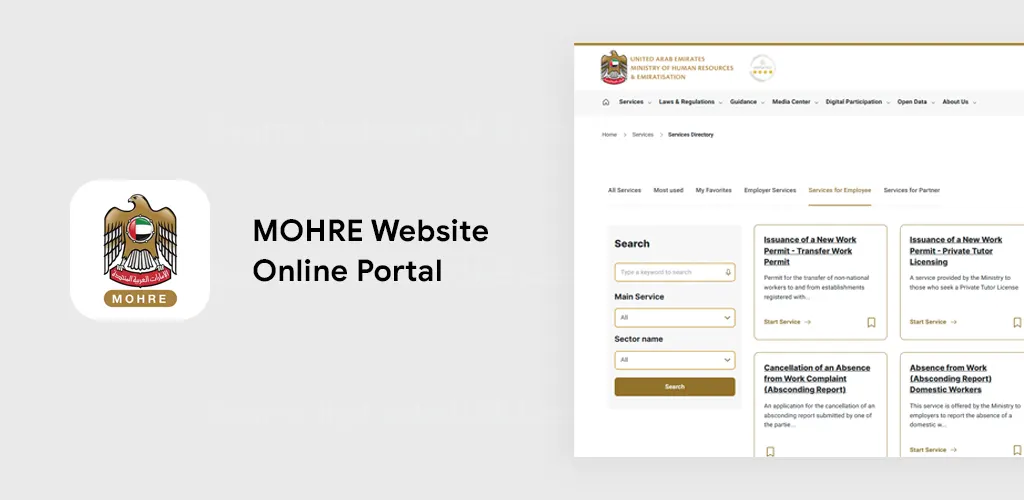
The UAE now uses digital employment records, making labour card download simple through official online channels. If you’re looking for how to download labour card UAE, follow these steps:
Through the MOHRE Website
- Visit the Official > MOHRE Website
- Click Services and Select Employee Services
- Locate Transactions Inquiry Service to Obtain Your Work Permit
- Click > Start Services
- Choose Work Permit and select Print Electronic Work Permit
- Fill Your Details and Submit to Download
This allows employees to complete a UAE labour card download without visiting a physical centre.
Why Download Your Labour Card?
Employees should periodically download updated copies whenever significant employment changes occur. Keeping a copy of your digital permit can be useful for:
- Employment verification
- Personal record keeping
- Government applications
- Banking procedures
- Housing and tenancy processes
- Future employment transitions
Did You Know?
That, thanks to the new nationwide Work Bundle platform, the work permit (labour card) step that used to take around 30 days can now be completed in about five working days? The system merges multiple services into one journey, shrinking fifteen steps across several platforms into just five steps that also cover medical tests, Emirates ID and residency issuance.
Using UAE Pass to Access Your Labour Card
The UAE government continues to expand digital access through UAE Pass. Many government services now allow employees to verify their identity and access official records using a secure UAE Pass login.
The general process involves:
- Download > Install and Open the UAE Pass App on Your Phone.
- Verify Your Identity Using UAE Pass Authentication.
- Tap on the Add Document option.
- Search and Select MOHRE Services.
- Choose Labour Card.
- Tap Confirm to Request the Document.
- Once the Document is Ready, Go to > Documents, Tap Labour Card, and View or Download the file.
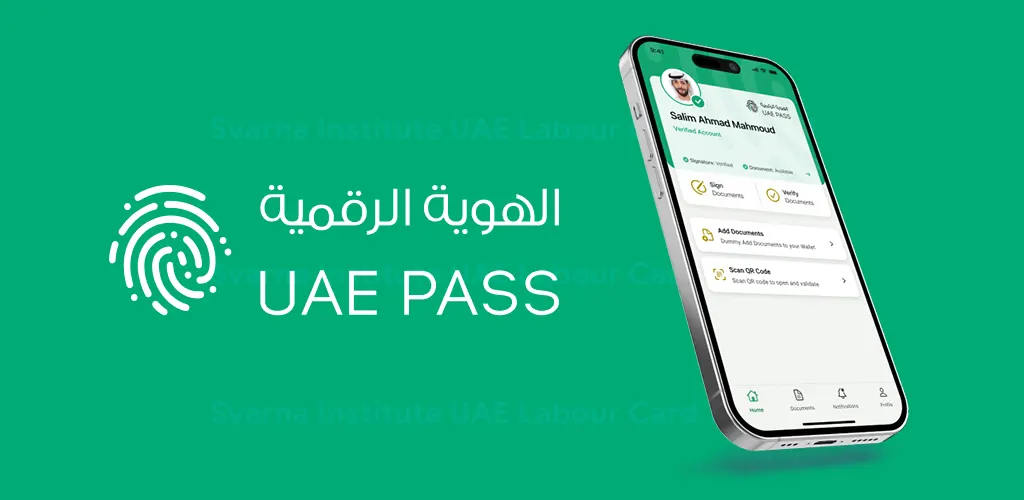
Because UAE Pass integrates with numerous government systems, it often provides one of the fastest and most secure methods for accessing employment information. Employees should ensure that their UAE Pass account information remains current and linked to their official records.
Using the MOHRE App for Labour Card Access
The MOHRE mobile app is a simple way to access labour related services.
The application typically allows users to:
- Download > Install and Open the MOHRE App on Your Phone
- Verify Your Identity Using UAE Pass Authentication
- Go to Employee Services > Employee Section or your Dashboard
- Select the Labor Card Option > View Digital Card, or Download the file
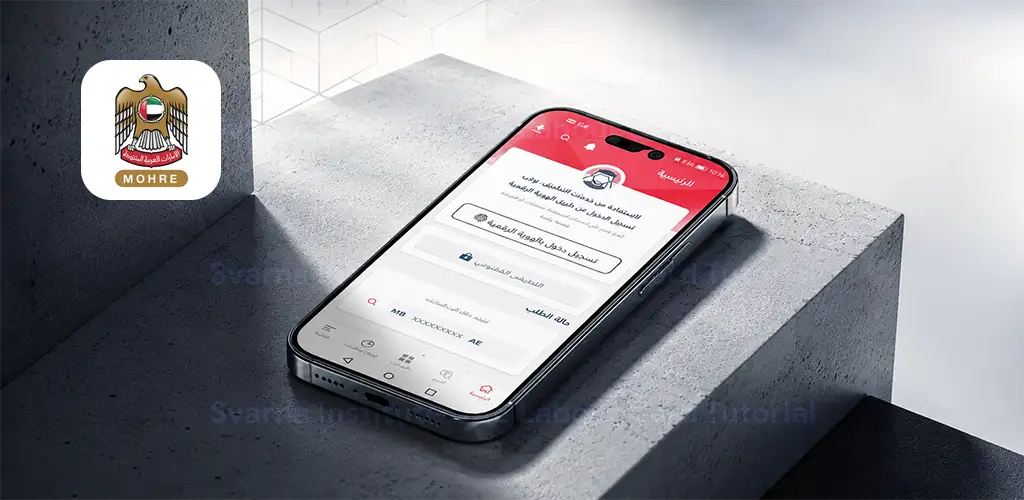
If you are searching for how to download labour card online or how to download labour card in UAE, the MOHRE mobile application is often one of the easiest solutions.
Can You Find a Labour Card Number Through an Emirates ID?
Many people ask whether a labour card number in Emirates ID exists.
The Emirates ID number and labour card number are different. However, some government services may allow you to access employment information using Emirates ID verification.
This is why many employees search for:
- How to check labour card number with Emirates ID
- How to check labour card number
- How to find labour card number
The exact information available may vary depending on the platform, verification method, and current government system functionality.
What Does a UAE Labour Card Look Like?
Many employees search for a UAE labour card sample to see what it looks like. Today, labour cards are mostly available in digital format and usually display employee details, employer information, and work permit records.
07. Checking Labour Card Status, Fines and Violations
Whether you are tracking a new work permit, a renewal application, or verifying employment records, monitoring your labour card information is important.
The UAE’s digital services make it easy for employees and employers to access labour-related information through official channels.
This section explains how to perform a labour card online check, verify labour card status, review fines and violations, and understand what happens if a labour card expires.
How to Check Labour Card Status Online
One of the most common questions employees ask is how to check labour card status after an application, renewal, or employment transfer. The easiest way is through official MOHRE digital services.
Labour Card Status Check Through MOHRE Web
In most cases, employees can perform a MOHRE labour card status verification by:
- Visiting the official MOHRE website.
- Logging into the employee portal.
- Accessing employment or work permit services.
- Viewing available permit details and employment records.
- Reviewing the current application or permit status.
Depending on the service being used, the system may require information such as:
- Labour card number
- Work permit reference number
- Emirates ID details
- UAE Pass authentication
Using the MOHRE Mobile Application
Employees can also complete a labour card check online UAE through the official MOHRE mobile app.
The app often provides access to:
- Work permit information
- Employment contracts
- Permit validity dates
- Employment status updates
- Labour related services
Using the mobile application allows employees to monitor their records without visiting a service centre.
How to Check Labour Card Status Offline
While digital services are the preferred option, some employees may still prefer face to face assistance. In these situations, authorised service centres can help with a labour card inquiry and employment verification.
Visiting a Tasheel or Service Centre
When requesting assistance, employees should ideally bring:
- Passport copy
- Emirates ID
- Residence visa copy (if available)
- Employment related documents
A service representative may be able to assist with:
- Labour card verification
- Permit status confirmation
- Application tracking
- Renewal enquiries
- Cancellation enquiries
- General employment record checks
This option can be particularly useful for individuals who have difficulty accessing online systems or require additional guidance.
How to Check Labour Card Fines and Violations
Another frequently searched topic is how to check labour card fine information. Labour related penalties are typically linked to permit compliance, employment authorisation requirements, and regulatory obligations.
Common Labour Card Violations
Some common situations that may result in compliance issues include:
- Delayed work permit issuance
- Late labour card renewal
- Working without proper authorisation
- Failure to update employment records
- Labour law compliance breaches
- Unauthorised employment activities
Where Can You Check Labour Card Fines?
Depending on the nature of the issue, labour card fine information may be available through:
- MOHRE digital services
- Official mobile applications
- Authorised service centres
- Employer compliance records
Employees who discover a violation should seek clarification immediately rather than allowing the issue to remain unresolved, as penalties and administrative restrictions can become more complicated over time.
What Happens If My Labour Card Expires?
An expired labour card should never be ignored. Both employers and employees have a responsibility to ensure that work permits remain valid throughout the employment relationship.
When a permit expires, employers are generally expected to either:
- Renew the work permit,
- Process employment cancellation, or
- Complete any legally required employment transition procedures.
Potential Consequences of Expired Labour Cards
Failure to address an expired permit may result in:
- Administrative penalties
- Compliance issues
- Delays in employment transactions
- Restrictions on company services
- Employment record complications
Because regulations and enforcement practices can change over time, employers should monitor expiry dates carefully and initiate renewal procedures well before the permit reaches its expiration date.
The safest approach is proactive compliance rather than waiting until the final days before expiry.
How to Check Labour Card Using Emirates ID
A common search query is whether employees can complete a labour card check using only their Emirates ID information. The answer depends on the government platform and verification method being used.
In some situations, Emirates ID details may be used to authenticate identity and retrieve employment information linked to official records.
How to Check Labour Card Online Using Emirates ID
Employees who want to know how to check labour card online may be able to:
- Log into approved government platforms.
- Verify identity using UAE Pass or Emirates ID-linked credentials.
- Access employment related records.
- View available permit information.
What Information Can Be Displayed?
Depending on the system, employees may be able to view:
- Labour card status
- Permit validity dates
- Employer information
- Employment contract records
- Application progress
It is important to remember that Emirates ID numbers and labour card numbers are separate identifiers, even though government systems may link them within official employment records.
For employees searching check labour card status online UAE, official government platforms remain the most reliable and secure source of information.
08. Labour Card Renewal, Rules, Timelines and Process
Obtaining a labour card is only the beginning of the employment lifecycle. To maintain legal employment status and remain compliant with UAE regulations, employers must ensure that work permits are renewed before they expire.
Failure to renew a labour card on time can result in administrative penalties, disruptions to employment records, and compliance issues for both employers and employees.
Fortunately, the renewal process has become significantly more efficient in recent years, with most applications now handled through digital government platforms and authorised service centres.
Understanding the renewal rules, timelines, and procedures can help businesses avoid unnecessary delays and costly mistakes.
Regulations and Guidelines for Labour Card Renewal
Labour card renewals are generally initiated by the employer or an authorised company representative. The renewal process should not be left until the last moment. Employers are encouraged to monitor permit expiry dates and begin preparations well in advance to ensure uninterrupted compliance.
When Should a Labour Card Be Renewed?
As a best practice, employers should start reviewing renewal requirements before the permit reaches its expiry date. This allows sufficient time to:
- Verify employee records
- Update supporting documents
- Resolve outstanding compliance issues
- Complete related immigration procedures where applicable
Delaying renewal can increase the risk of administrative complications and may expose the organisation to regulatory penalties.
Validity of Renewed Labour Cards
A renewed labour card is typically issued in accordance with the applicable employment arrangement and relevant government regulations in force at the time of renewal.
Because employment and immigration records are interconnected, employers should ensure that all related documentation remains accurate and up to date throughout the renewal process.
Step by Step Labour Card Renewal Process (Online)
The modern labour card renewal process is largely completed through official digital platforms, making it faster and more convenient than traditional paper based procedures.
Although exact steps may vary depending on company classification and employee category, the general process follows a similar pattern.
(Step 1) Employer Accesses the MOHRE System
The employer, HR department, or authorised PRO logs into the appropriate government portal and accesses work permit renewal services.
(Step 2) Review Employee Information
The company verifies:
- Employee details
- Employment status
- Contract information
- Supporting documentation
- Compliance records
Any discrepancies should be corrected before proceeding.
(Step 3) Submit Renewal Application
The renewal request is submitted electronically along with any required supporting documents.
(Step 4) Pay Applicable Fees
The employer completes payment of the applicable government charges and service fees associated with the renewal.
(Step 5) Government Review and Processing
The relevant authority reviews the application and confirms that all requirements have been satisfied.
(Step 6) Access Updated Digital Records
Once approved, the renewed permit becomes available within the employee’s official employment records and digital systems.
For organisations seeking how to renew labour card online, this electronic workflow has become the standard renewal method across most mainland private sector employment categories.
Labour Card Renewal Through Tasheel and Service Centres
Although online services have become the preferred option, some companies still choose to process renewals through authorised service centres. This approach is often used when:
- Additional assistance is required
- Complex employment situations exist
- Supporting documentation requires review
- Companies prefer PRO managed submissions
How the Process Typically Works
An authorised representative visits a service centre with the required documentation and requests renewal assistance. The service centre may assist with:
- Application preparation
- Document verification
- Submission procedures
- Fee processing
- Application tracking
Once the request is submitted, the employer can monitor the progress until approval is completed and updated employment records become available.
Renewal Fees and Late Penalties
One of the most common questions surrounding the labour card renewal process relates to costs. The total renewal cost can vary based on several factors, including:
- Company classification
- Employee skill category
- Business activity
- Permit type
- Applicable government charges
- Service centre fees (if used)
For this reason, employers should always verify the latest fee structure through official government channels before submitting a renewal application.
What Happens If Renewal Is Delayed?
Allowing a labour card to expire without taking timely action can create unnecessary compliance risks. Potential consequences may include:
- Administrative penalties
- Delays in employment transactions
- Restrictions on certain government services
- Additional compliance requirements
- Operational disruptions for employers
Best Practice for Employers
Rather than waiting until the final weeks before expiry, many experienced HR departments maintain internal renewal calendars and automated reminders.
A proactive approach helps ensure that permits remain valid, employees continue working legally, and businesses avoid avoidable penalties or interruptions to their operations.
Did You Know?
MOHRE classifies companies into categories (A, B and C), and this directly changes the government fee tied to your labour card from about AED 250 at top compliant employers up to AED 3,450 at high risk ones? The same digital labour card can therefore cost the employer many times more purely based on its compliance track record and WPS performance, even though employees enjoy the same legal protection.
09. Labour Card Cancellation and Job Change Scenarios
Employment relationships do not last forever.
Whether an employee resigns, accepts a new job offer, leaves the UAE, retires, or experiences company closure, the existing employment record must eventually be closed through the appropriate government procedures.
This is where the labour card cancellation process becomes important.
A labour card cancellation officially records the end of the employment relationship and updates the employee’s status within government systems. Completing this process correctly helps prevent future employment complications, visa issues, and compliance concerns for both employers and employees.
Understanding how cancellation works is particularly important for employees planning to change jobs within the UAE or move to a new sponsor.
Regulations and Guidelines for Labour Card Cancellation
A labour card should generally be cancelled whenever an employment relationship officially ends.
Common situations include:
- Employee resignation
- Employer termination
- End of a fixed term contract
- Company closure
- Workforce restructuring
- Employee relocation outside the UAE
- Non-renewal of employment arrangements
The purpose of cancellation is to ensure that government records accurately reflect the employee’s current employment status. Until the cancellation process is completed, employment records may continue to show an active relationship between the employer and employee.
Why Proper Cancellation Matters
Timely labour card cancellation helps:
- Maintain accurate employment records
- Prevent future work permit complications
- Support lawful employment transfers
- Facilitate visa related procedures
- Reduce compliance risks for employers
Ignoring cancellation requirements can create unnecessary administrative issues later, particularly when applying for a new work permit or changing employers.
Allowed Scenarios and Who Initiates the Cancellation
A common question is who actually initiates the cancellation request. In most cases, the employer or an authorised company representative submits the request through the appropriate government channels.
Employer Initiated Cancellation
This typically occurs when:
- Employment is terminated
- Contract periods end
- Workforce reductions occur
- Business operations cease
Employee Initiated Employment Changes
Although the formal submission is generally handled by the employer, employees may request cancellation when:
- Resigning from a position
- Accepting a new employment opportunity
- Leaving the UAE permanently
- Changing sponsorship arrangements
Special Situations
Certain cases may require additional review, including:
- Employer non cooperation
- Labour disputes
- Absconding reports
- Ongoing legal proceedings
- Employment transfer requests
In such situations, employees may need guidance from MOHRE or authorised service centres before proceeding.
10. Step by Step Labour Card Cancellation Process (Online)
The modern labour card cancellation online process is primarily handled through electronic government systems.
While exact requirements may vary depending on the employee category and circumstances, the process generally follows these steps.
(Step 1) Prepare Employment Closure Documentation
The employer reviews the employee’s records and confirms that all employment-related obligations have been addressed.
(Step 2) Submit Cancellation Request
The employer or authorised representative accesses the relevant government platform and submits the cancellation application.
(Step 3) Verify Employee Information
Authorities may review:
- Employment records
- Contract information
- Employee identification details
- Compliance status
(Step 4) Obtain Required Acknowledgements
Depending on the circumstances, employee confirmation or supporting documentation may be required before approval.
(Step 5) Government Review
The application is reviewed and processed by the relevant authority.
(Step 6) Approval and Record Update
Once approved, the employment record is updated to reflect the end of the employment relationship. At this stage, the official labour card cancellation is considered completed.
Labour Card Cancellation Through Tasheel and Service Centres
Some employers prefer to process cancellations through authorised service centres rather than handling submissions directly online.
This approach is often used when:
- Additional assistance is required
- Documentation needs verification
- Complex employment situations exist
- Companies rely on external PRO services
Typical Service Centre Support
Authorised representatives may assist with:
- Application preparation
- Document verification
- Submission processing
- Status tracking
- Compliance guidance
Once the request has been submitted, employers can continue monitoring the application until final approval is issued.
How to Check Labour Card Cancellation Status
After submitting a cancellation request, employers and employees often want confirmation that the process has been completed successfully.
Labour Card Cancellation Status Online
In many cases, the labour card cancellation status online can be monitored through official government platforms and approved digital services.
Depending on the system being used, users may encounter statuses such as:
Pending
- Application has been submitted and is awaiting review.
Under Processing
- Authorities are currently reviewing the request.
Approved
- Cancellation has been completed successfully.
Rejected
- Additional action, clarification, or documentation may be required.
Why Status Monitoring Matters
Checking your labour card cancellation status helps ensure that the employment relationship has been officially closed and reduces the likelihood of future administrative complications.
Link Between Labour Card Cancellation and Visa Cancellation
One of the biggest misconceptions among employees is believing that labour card cancellation and visa cancellation are identical processes. They are closely connected, but they serve different purposes.
Labour Card Cancellation
This closes the employment relationship and updates labour records.
Residence Visa Cancellation
This updates the employee’s immigration status and residency records.
Why Both Processes Matter
In most employment exit scenarios, both labour and immigration records must eventually be updated.
The exact sequence may vary depending on the employee’s circumstances, employer procedures, and applicable regulations. However, employers generally coordinate labour related and immigration related processes to ensure that records remain consistent across government systems.
Employees planning to transfer to a new employer should always confirm that both employment and immigration requirements have been completed correctly before assuming the process is fully closed.
Taking this extra step can prevent delays when applying for a new work permit, changing sponsors, or beginning a new job within the UAE.
11. Common Mistakes and Practical Compliance Tips
Most labour card problems are not caused by complex legal issues. They are caused by simple oversights.
A missed renewal deadline, an incorrect job title, an outdated employment record, or a misunderstanding about work authorization can quickly create unnecessary complications for both employers and employees.
The good news is that most of these issues are entirely preventable.
Common Mistakes Employers Make
Delaying Applications or Renewals, One of the most frequent compliance mistakes is waiting too long to initiate permit applications or renewals. The profession listed within employment records should accurately reflect the employee’s role. Failing to maintain organised employment records often leads to avoidable administrative issues.
Last minute submissions increase the risk of:
- Processing delays
- Administrative penalties
- Employment interruptions
- Compliance concerns
- Incorrect Job Titles
Using an inappropriate or outdated job title can create complications during:
- Employment transfers
- Professional licensing processes
- Immigration procedures
- Regulatory reviews
- Poor Record Management
Companies should regularly review:
- Employment contracts
- Permit validity dates
- Employee documentation
- Government approvals
- Compliance records
Common Mistakes Employees Make
Working for Another Employer Without Authorisation – Employees sometimes assume they can work for multiple employers without obtaining the required approvals. Doing so may create compliance issues and expose both parties to penalties.
Ignoring Expiry Dates – Many employees rely entirely on their employer to manage permit renewals. While employers have responsibilities, employees should also remain aware of their employment status and permit validity periods.
Failing to Verify Employment Records – Employees should periodically review their employment information and immediately report any inaccuracies to HR or the appropriate authority.
Practical Compliance Tips
Whether you are an employee, HR executive, PRO, or business owner, the following practices can help minimise compliance risks:
- Maintain a calendar of permit expiry dates.
- Start renewal procedures early.
- Save digital copies of employment documents.
- Regularly review employment records.
- Verify information before signing contracts.
- Keep contact details updated.
- Respond promptly to government requests.
- Seek clarification immediately when discrepancies arise.
- Use official government channels whenever possible.
- Address issues before they become compliance problems.
A proactive approach is almost always less expensive and less stressful than trying to resolve a preventable issue after it has already occurred.
HRM Related Posts
- Beginners Guide to Payroll and Tax Services in UAE, 11 Things you need to know
- Build a Bulletproof HR Recruitment Process in UAE – The 10 Stage Recruiter Playbook for 2026
- HR Policies in UAE (2026 Guide) Legal HRM Compliance Explained
- Learn Everything About HR Document Management System (DMS) in 2026
- The Only Onboarding and Offboarding Process UAE Companies Need in 2026 (Playbook + Checklist)
- These 10 Latest HR Trends Are Redefining Traditional HR Priorities in Dubai 2026
- UAE Labour Card in 2026, Complete Guide for UAE Professionals
- UAE Labour Law 2026 (Guide) 22 Rules Every Employee and HR Must Know
- UAE Labour Law Annual Leave, Sick & Emergency & Leave Salary Explained
- UAE Wage Protection System Updates 2026, MOHRE (WPS) Rules Every Employer & HR Should Know